Sciatica Treatment
Understanding nerve pain, low back involvement, and symptoms down the leg
Sciatica can be frustrating, confusing, and uncomfortable.
You may feel pain, numbness, tingling, burning, or nerve-like symptoms traveling into the glute, leg, calf, or foot.
Many people describe any nerve pain in the leg as “sciatica,” but true sciatica has a more specific meaning.
Dr. Ethan Marler, Chiropractor, helps patients understand what may be causing their symptoms and whether the low back, pelvis, surrounding joints, muscles, or nerve irritation may be involved.

What is sciatica?
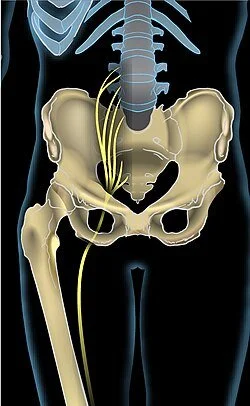
Sciatica refers to symptoms related to irritation of the sciatic nerve or nerve roots that originate from the low back and travel into the leg.
One of the biggest misconceptions is that all leg nerve pain is sciatica.
It is not.
Nerve-like symptoms in the leg can come from different sources. True sciatica involves the low back as part of the problem. That is why only treating the foot, calf, hamstring, or glute may miss the bigger picture.
If the nerve symptoms are coming from the low back, then the low back needs to be assessed.
Common symptoms associated with sciatica
Sciatica may involve:
low back pain,
glute pain,
pain traveling down the leg,
numbness,
tingling,
burning,
symptoms into the calf or foot,
pain with sitting,
pain with bending,
or discomfort with certain movements.
The pattern can vary from person to person.


Why assessment matters
The word “sciatica” is often used casually, but treatment should not be casual.
Before deciding what to do, Dr. Marler looks at:
where symptoms travel,
what movements worsen or improve them,
whether the low back reproduces symptoms,
whether there are signs of nerve involvement,
how long symptoms have been present,
what daily activities aggravate the issue,
and whether referral or imaging may be appropriate.
The goal is to identify what is actually contributing to the symptoms, not just chase pain down the leg.
Dr. Marler’s approach to sciatica
Treatment depends on the person and the cause.
Low back-focused movement
If symptoms are truly sciatic, repetitive or specific movements of the low back may be useful. The exact movement depends on the individual assessment.
Soft tissue therapy
Muscle tension around the low back, hips, glutes, or pelvis may contribute to discomfort or sensitivity. Soft tissue work may help improve comfort and movement.
Activity modification
Sitting, bending, lifting, running, or training may need temporary changes. The goal is to keep you moving where possible while avoiding repeated aggravation.
Chiropractic care
Adjustments may be used when joint movement in the low back, pelvis, or surrounding areas is contributing to symptoms.
Education
Understanding sciatica can reduce fear. Many patients feel more confident once they understand that symptoms down the leg do not always mean something is permanently damaged.
When to seek urgent medical care
Seek medical care promptly if you experience:
loss of bowel or bladder control,
numbness in the groin or saddle area,
significant or worsening leg weakness,
severe trauma,
associated with fever,
unexplained weight loss,
or rapidly worsening neurological symptoms.

Frequently asked questions
-
No. Sciatica specifically refers to nerve symptoms related to the sciatic nerve or nerve roots from the low back. Other conditions can also create nerve-like symptoms in the leg.
-
The nerves that travel into the leg originate from the low back. If those nerves are irritated near the spine, symptoms may be felt along the pathway of the nerve into the leg.
-
Chiropractic care may help some cases of sciatica, depending on the cause. Dr. Marler assesses the low back, pelvis, movement patterns, and symptoms to determine an appropriate plan.
-
Not always. Some people stretch the leg because that is where they feel symptoms, but if the issue is coming from the low back, leg stretching alone may not address the cause.
-
The right exercises depend on the person. Dr. Marler may use specific low back movements, mobility work, strengthening, or activity modifications based on the assessment.