Headaches & Neck-Related Headaches
Care for headaches connected to neck tension, joint restriction, posture, stress, and jaw-related muscle tightness
Headaches can make it hard to work, think, focus, train, sleep, or enjoy your day.
Many people assume headaches are something they simply have to live with. But some headaches are strongly connected to the neck, shoulders, jaw, and muscles at the base of the skull.
Dr. Ethan Marler, Chiropractor, assesses headaches from a musculoskeletal perspective. The goal is to understand whether neck movement, muscle tension, jaw involvement, posture, stress, or other factors may be contributing.

Common headache types
There are many types of headaches. Some require medical evaluation. Others may be related to muscles, joints, and movement.
Tension-type headaches
Tension-type headaches are often related to tight muscles in the neck, shoulders, base of the skull, or jaw.
They may feel like pressure, tightness, or a band wrapping around the head.
These headaches are often associated with stress, desk work, poor sleep positions, long hours of concentration, or muscle tension.
Migraine-related symptoms
Migraines are more complex and vary significantly from person to person.
Triggers can include sleep, hormones, stress, weather, pressure changes, certain foods, light, or other individual factors.
Chiropractic care may not be the complete solution for migraines, but for some people it may help reduce contributing neck tension, joint restriction, or overlapping headache symptoms.
Cervicogenic headaches
“Cervicogenic” means the headache is coming from the neck.
These headaches may be related to joints in the neck not moving as well as they should. They can feel similar to other headaches, but neck movement, stiffness, or tenderness may be part of the pattern.

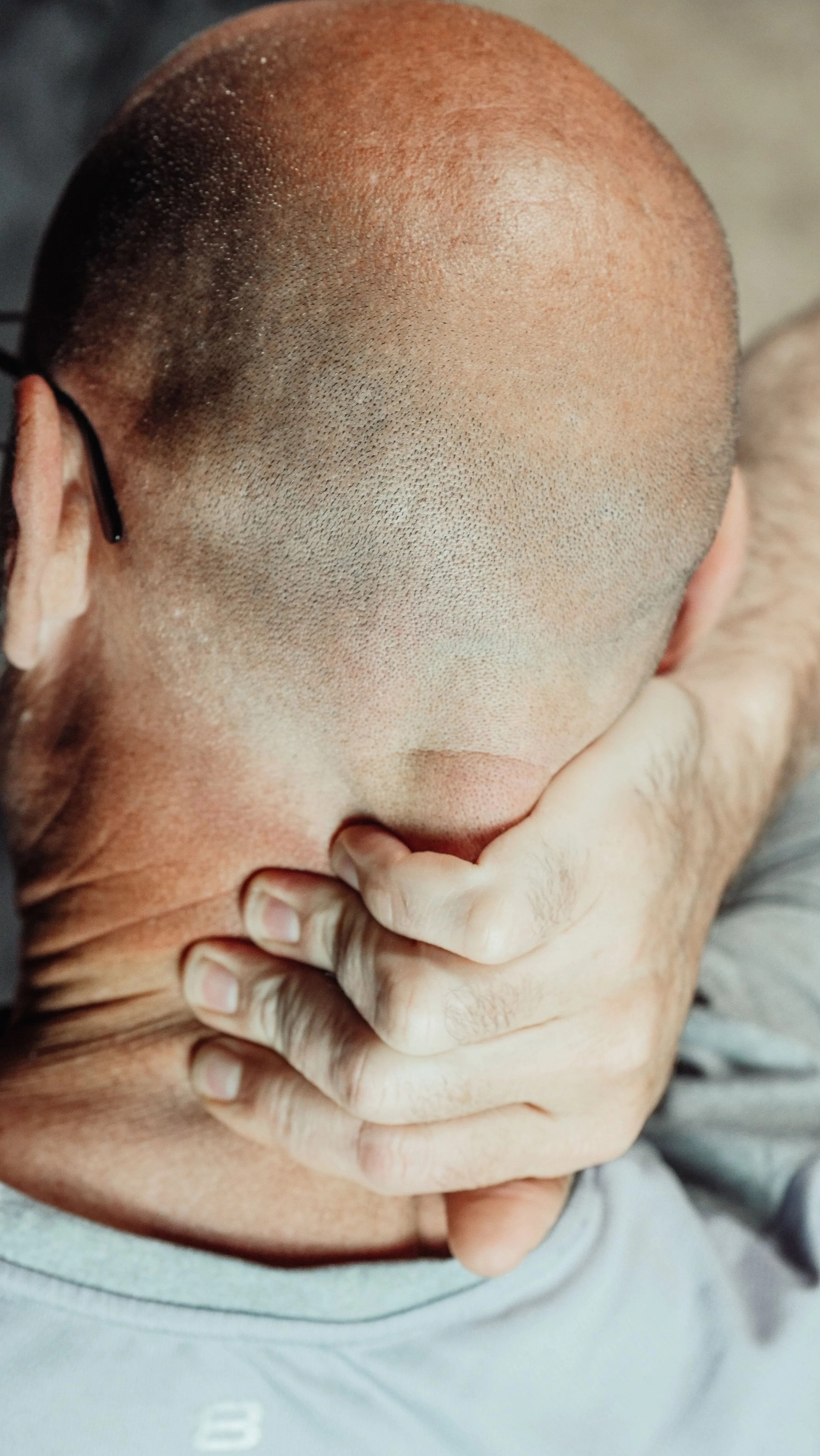
Why the neck can contribute to headaches
The neck, shoulders, jaw, and base of the skull are closely connected.
Muscles in these areas can become tight or irritated from:
long hours at a computer,
studying,
stress,
jaw clenching,
sleeping awkwardly,
poor movement habits,
or sustained positions.
For some patients, pressure on a specific area in the neck or base of the skull can recreate their familiar headache. That can suggest the neck is playing a role.
Dr. Marler’s approach to headache care
Dr. Marler’s treatment approach depends on the type of headache and what the assessment shows.
Chiropractic adjustments
If restricted movement in the neck is contributing to headache symptoms, adjustments may help restore motion and reduce irritation.
Stretching and mobility strategies
Dr. Marler may recommend individualized stretches or mobility work based on the muscles and movements involved.
Education
Understanding what type of headache you may be dealing with can help you make better decisions about care, self-management, and when to seek medical evaluation.
Soft tissue therapy
Muscle tension in the neck, shoulders, jaw, and base of the skull can contribute to headaches. Soft tissue work may help calm those tissues and reduce tension.
Stress and posture strategies
If headaches are connected to prolonged sitting, desk work, stress, or jaw clenching, Dr. Marler may suggest practical strategies to reduce repeated tension during the day.
When to seek urgent medical care
Seek medical care promptly if you experience:
the worst headache of your life,
sudden thunderclap headache,
headache after significant trauma,
headache with weakness, confusion, fainting, vision loss, or difficulty speaking,
headache with fever or stiff neck,
new or unusual headache symptoms,
or headaches that are rapidly worsening.


The goal: reduce the load on your system
Headaches often have more than one contributing factor.
You may be dealing with stress, poor sleep, neck tension, jaw clenching, desk posture, migraine triggers, and muscle tightness at the same time.
Dr. Marler’s goal is to identify which factors may be changeable and help reduce the overall load on your system. Even when chiropractic care is not the entire answer, improving neck and muscle function may help reduce severity, frequency, or irritation for some patients.
Frequently asked questions
-
Chiropractic care may help headaches that are related to neck joint restriction, muscle tension, posture, stress, or jaw-related tightness.
-
A neck-related headache, often called a cervicogenic headache, is a headache that originates from structures in the neck, such as joints, muscles, or irritated tissues.
-
Tension headaches often feel like pressure, tightness, or a band around the head. They may be associated with tight muscles in the neck, shoulders, base of the skull, or jaw.
-
Yes. Jaw clenching and jaw-related muscle tension can contribute to headaches, especially when combined with neck and shoulder tension.
-
Seek urgent medical care if a headache is sudden and severe, unlike your usual headaches, associated with neurological symptoms, follows trauma, or comes with fever, confusion, weakness, vision changes, or other concerning signs.